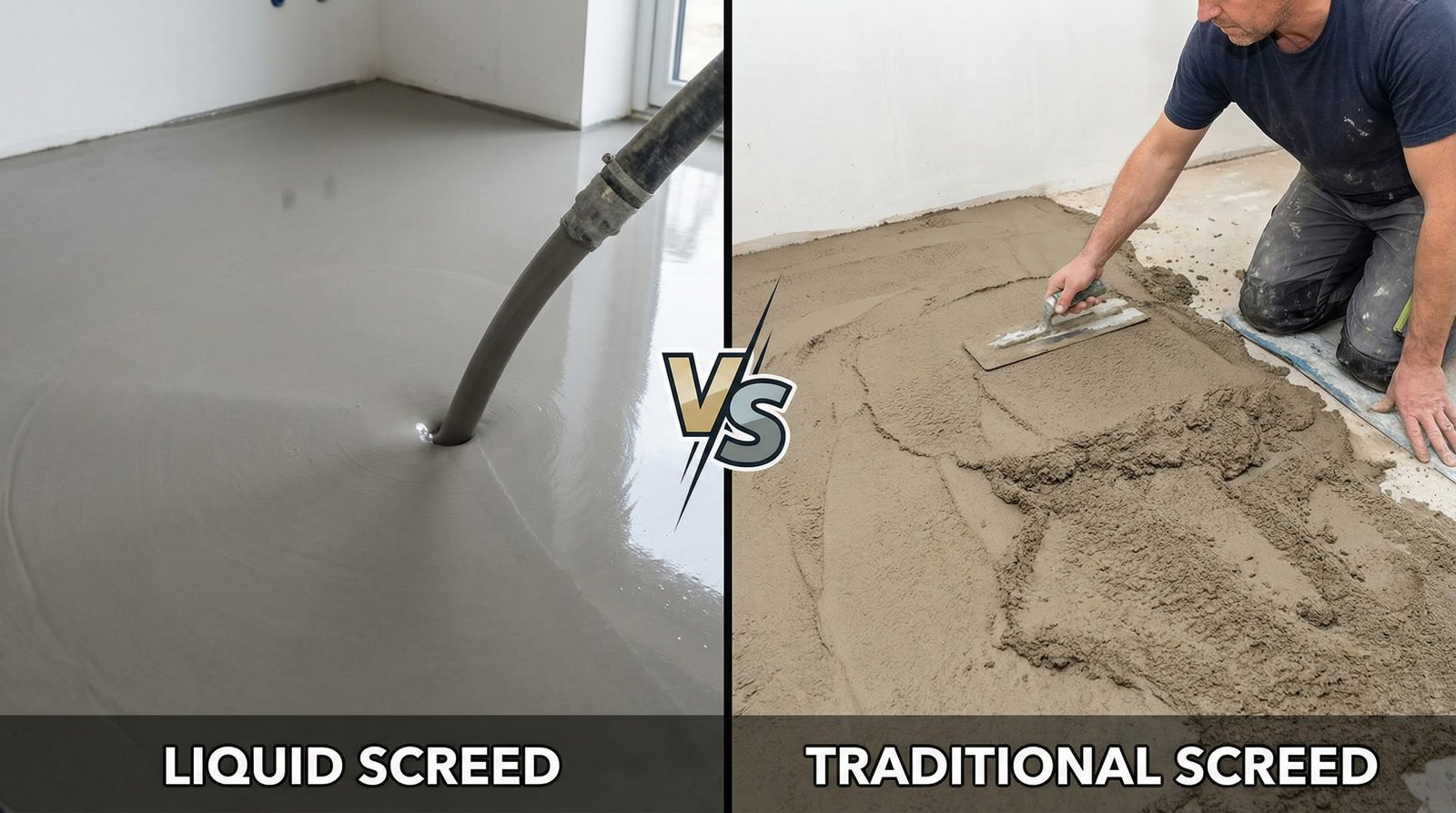
Understanding the Core Differences
When it comes to floor preparation, choosing the right screed is critical for the longevity and finish of your final floor covering. The two main contenders in the UK market are Traditional Sand and Cement Screed and Liquid Flowing Screed (often referred to as Calcium Sulphate or Anhydrite screed).
While both serve the purpose of leveling a subfloor, the application methods, drying times, and performance characteristics differ significantly.
Traditional Sand and Cement Screed
Traditional screed consists of a semi-dry mix of sand and cement, usually at a 3:1 or 4:1 ratio. It is manually applied using a shovel, straightedge, and float.
Pros:
Cons:
Liquid Flowing Screed
Liquid screed is delivered to site ready-mixed and is pumped directly onto the floor. It is self-leveling and self-compacting.
Pros:
Cons:
The Verdict: Which should you choose?
The decision usually comes down to the scale of the project and whether you are installing underfloor heating. For large commercial spaces or homes with UFH, Liquid Screed is almost always the superior choice due to its thermal properties and rapid installation. For smaller, bespoke areas requiring slopes or where access for a pump is impossible, Traditional Screed remains the industry standard.
Contact our team today to discuss your specific requirements and get a professional recommendation.
Share this expert guide:
Need expert advice for your floor?
Our technical team provides free site surveys across the UK. Get an accurate quote for your liquid or traditional screed project today.